
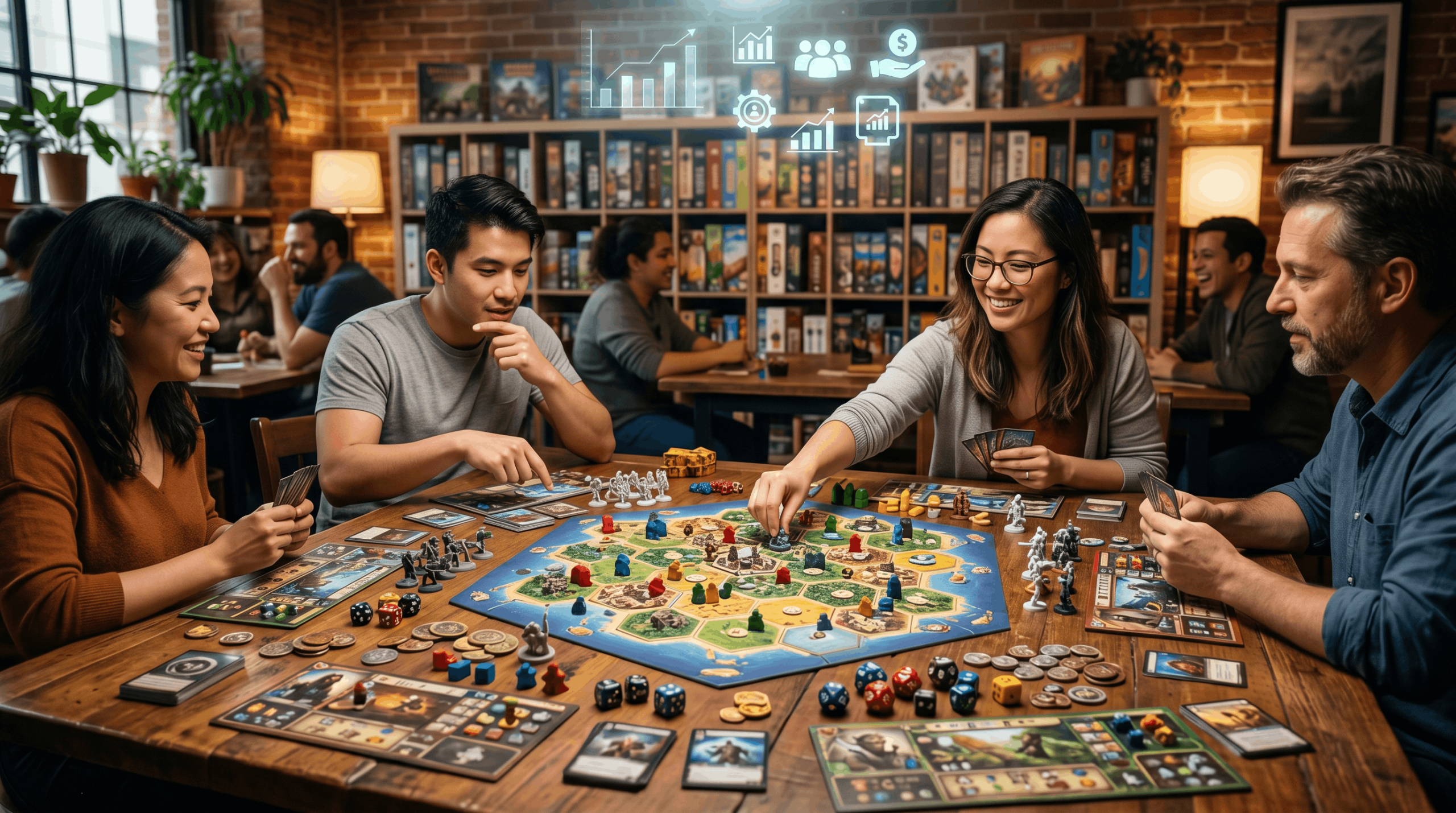

A review of the industry as it stands today.
The Board Game Market is Growing, But Success is Difficult.
Most industry analysts project healthy long-term growth, although they disagree on the exact market size because they use different definitions (board games vs. tabletop games vs. playing cards). Most forecasts place annual growth around 8-10% through the early 2030’s, driven by continued consumer interest in social, screen-free entertainment. [1]
Growth is being fueled by a number of factors, including: Family and casual gaming, adult hobby gamers, educational games, higher spending on premium products, and strong online retail.
While the industry is larger, publishers face serious challenges.
Oversaturation
With thousands of new titles released every year, standing out has become one of the industry’s biggest problems. Many excellent games disappear after a single print run simply because consumers can’t notice everything being released.
While a good game is ground zero, they also need:
- Strong artwork
- Professional marketing
- Reviewers and influencers
- Convention presence
- Crowdfunding success
- Social media momentum
Manufacturing remains expensive
Publishers continue dealing with: higher printing costs, shipping volatility, tariffs affecting international distribution, and warehouse expenses. Large miniature-heavy games have become especially expensive. Recent high-profile announcements illustrate these pricing pressures.
This has pushed retail prices upward. Five years ago a major strategy game might cost $50 – 60. Today many comparable releases are: $70 – $90, with deluxe editions $120 and up.[2]
Crowdfunding has changed
Crowdfunding is no longer simply a way to raise money. It is now a combination of a preorder platform, marketing event, and tool for building community. Publishers routinely launch campaigns that already have finished artwork and nearly complete production files.
Player tastes are shifting
Several design trends continue to be strong.
- Cooperative games: Players increasingly enjoy games where everyone works together rather than competing directly.
- Shorter games: Many gamers want meaningful decisions in 30 – 90 minutes rather than four-hour sessions.
- Solo play: Almost every medium or heavy game now includes a solo mode.
- Campaign and legacy games: Persistent progression remains popular, although consumers are becoming more selective.
- “Cozy” themes: Nature, animals, farming, cafés, and relaxing aesthetics continue to perform well.
- Social deduction and party games: These remain reliable sellers because they’re easy to teach and highly replayable.
Large publishers are getting larger
Industry consolidation continues. Large publishers are acquiring successful studios and expanding into fast-growing categories like party and social games, while independent publishers increasingly occupy niche markets.
This creates two distinct markets:
- major publishers producing global hits
- small publishers serving specialized audiences
The “middle” is becoming more difficult to sustain.
Retail game stores remain important
Despite online shopping, local game stores are still central to the hobby because they provide: demos, organized play, tournaments, game nights, communities.
Publishers increasingly recognize that long-term success often depends on building engaged local player communities, not just online sales.
Biggest risks
The industry’s main challenges are:
- Too many new releases competing for attention
- Rising manufacturing and shipping costs
- Consumer fatigue with expensive Kickstarter-style projects
- Difficulty for independent designers to gain visibility
- Economic uncertainty reducing discretionary spending
The Overall Outlook on Board Games
Ai Summary
The board game industry in 2026 is healthy but no longer in its explosive growth phase. Demand for tabletop gaming remains strong, and the market is expected to continue expanding over the next decade. However, commercial success has become significantly more difficult due to intense competition, rising production costs, and higher expectations from consumers. Publishers that combine polished design, strong visual presentation, effective community-building, and disciplined production are generally in the best position to succeed.
By J. · May 27, 2026 · Fact-checked by the editorial team
Sources: [1] [2] [3]. The AI Summary Spotlight section was AI-generated. For this article, AI tools also assisted with headline brainstorming and feature image. All reporting, editorial judgments, and final copy were written and verified by the author.